 Pay Invoice
 Feedback
 Locations
 Search


The early years of a child’s development move quickly. For families navigating a new diagnosis, a developmental delay, or simply a sense that their child could benefit from some additional support, understanding what NDIS early intervention involves and how to access it, is a great starting point.
This guide covers what NDIS early intervention is, who is eligible, how to apply, and what early childhood intervention services look like in practice. Rocky Bay provides early childhood intervention services across Western Australia, including a dedicated program for children who may not yet have an NDIS plan.
Whether you are exploring this for the first time or are already familiar with the NDIS and looking for information on Rocky Bay’s specific services, this guide is structured so you can navigate directly to what is most relevant to you.
New to early intervention? The sections below cover the foundations — what it is, who qualifies, and how to apply. If you’re already across the basics? Skip ahead to ‘What Does Early Childhood Intervention Look Like at Rocky Bay’.
What Is NDIS Early Intervention?
Early intervention refers to support provided to children, with the goal of building skills and to support their participation in everyday life. In the NDIS context, early intervention is a specific access pathway, not just a general term for any support provided early in life.
The NDIS recognises two main early intervention pathways. The first is the Early Childhood Approach, which supports children under nine who have a developmental delay or disability. The second covers early intervention supports that may be included in an NDIS plan for older children and adults, where timely support is likely to reduce the need for more intensive support later.
It’s important to understand that accessing early intervention through the NDIS does not automatically mean a child will require an NDIS plan long-term. For many families, early intervention is a time-limited period of targeted support that helps children and families build confidence, capability and connections at a stage that is meaningful for them.
Who Is Eligible for NDIS Early Intervention?
Children Under 9: The Early Childhood Approach
Under the Early Childhood Approach, children under nine can access NDIS-funded support without a formal diagnosis. The NDIS assesses eligibility based on the child’s functional needs; what the child can and cannot do, rather than requiring a specific diagnosis as a prerequisite.
In practical terms, this means families do not need to wait for a formal diagnosis to begin exploring support. An Early Childhood partner, such as an NDIS-registered provider, can help connect a family with an early intervention planner or connect them directly to the NDIS if a plan is needed. Rocky Bay does not determine NDIS eligibility but can support families in understanding and navigating the process.
Older Children and Adults
For children aged nine and over, and for adults, early intervention supports can be included in an existing NDIS plan where there is evidence that early support is likely to reduce future support needs or build long-term capacity. This is assessed by the NDIS on a case-by-case basis.
What Conditions or Delays Qualify?
There is fixed list of conditions that automatically qualify a child for NDIS early intervention support. Children with developmental delay, autism, cerebral palsy, communication differences, rare diseases and genetic conditions and a range of other disability or support needs may all be eligible depending on their individual circumstance.
A formal diagnosis is not always required, particularly under the Early Childhood Approach. For children under nine, support may be based on their functional needs and everyday experiences rather than a confirmed diagnosis.
If you are unsure what options may be available for your child, speaking with an Early Childhood Partner, healthcare professional or a registered provider who works with the NDIS regularly can be a helpful first step.
How to Apply for NDIS Early Intervention
The application process for NDIS early intervention follows a similar pathway as a standard NDIS access request, with some specific considerations for the Early Childhood Approach.
A good starting point is contacting the NDIS directly or speaking with an Early Childhood partner in your area. An Early Childhood partner can help connect your child with early intervention supports, even while an NDIS access decision is being made.
Supporting documentation can help demonstrate a child’s needs and the benefits of early intervention. This may include reports from a paediatrician, GP, physiotherapist, occupational therapist, or speech pathologist describing the child’s strengths, everyday experiences, support needs and recommended supports. The NDIS uses this evidence to assess whether early intervention criteria are met.
Rocky Bay’s team can support families through this process. For families whose children may not yet be eligible for NDIS funding, Rocky Bay also offers the Early Start Intervention Program — a no-cost option for eligible children under five, detailed in the next section. To understand what support options are available and how to take the next step, connect with Rocky Bay’s early childhood intervention services.

Read about how ESIP became a cornerstone of Annika’s development. With Rocky Bay therapists working in partnership with the family to set meaningful goals and embed therapy into daily routines. Sessions were scheduled around Annika’s nap times to ensure she could participate at her best. Read Annika’s full story.
What Does Early Childhood Intervention Look Like at Rocky Bay?
Rocky Bay’s approach to early childhood intervention is interdisciplinary and family-centred. This means your child’s therapy involves collaboration between your family and Rocky Bay’s team as equal partners.
Support is personalised from the outset. Rocky Bay begins with thorough information gathering and assessment, followed by collaborative goal setting and action planning based on your family’s priorities, strengths and circumstances. Goals are reviewed regularly as your child grows and their needs evolve.
Family involvement in sessions is central to how Rocky Bay’s early childhood intervention service works — and there is strong evidence to support this approach. Research indicates that one hour of therapist-to-family intervention can create up to 84 hours of learning opportunities for a child, compared to one hour when working with the child alone. Learn more about Rocky Bay’s early childhood intervention service.
The Early Start Intervention Program (ESIP)
For children under five who do not yet have an NDIS plan, Rocky Bay offers the Early Start Intervention Program (ESIP) — a 12-month, research-based program available at no cost to eligible families, made possible through the generous support of Telethon.
ESIP is designed for children with developmental delay, development regression or signs, symptoms, and risk factors associated with rare diseases. It delivers intensive, multidisciplinary therapy through a combination of physiotherapy, occupational therapy and speech pathology, working collaboratively around each child’s individual goals.
Therapy is delivered in the home and community, with children also able to participate in hydrotherapy and therapy playgroups as part of the program.
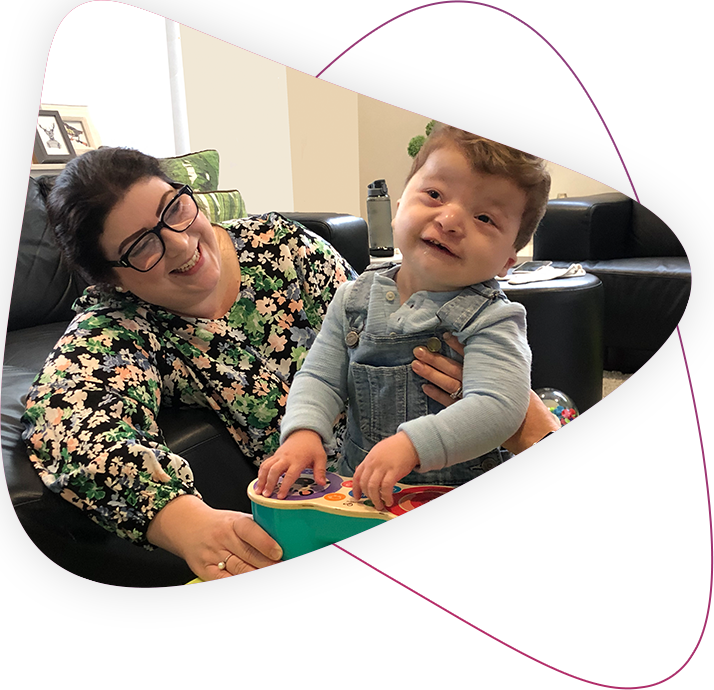
Henry, a Rocky Bay customer who accessed ESIP from infancy, received physiotherapy, occupational therapy and speech therapy at home. Read Henry’s story to understand what ESIP can look like in practice. Find out more about Rocky Bay’s Early Start Intervention Program.
If you have any questions around our early childhood approach connect with our friendly team now to learn more!